
Southern Indiana Artist Randy West
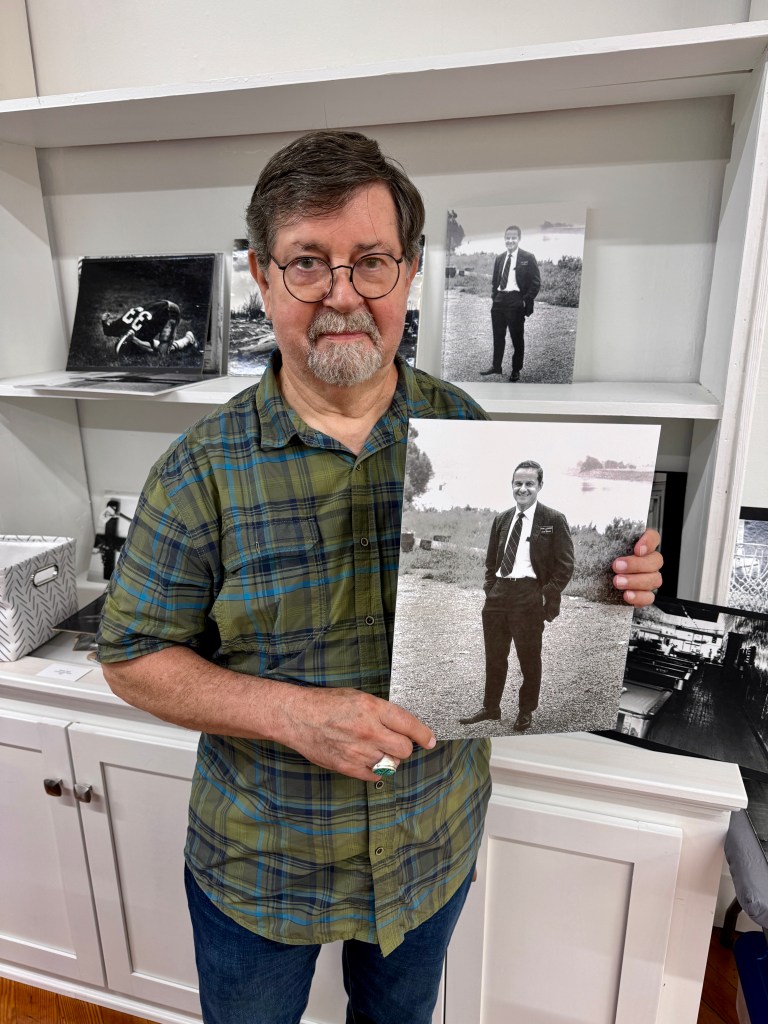
More than 100 vintage photographs of Harrison County and its residents were on display at Harrison County Arts in Corydon between Sept. 13 and Nov. 9, 2024. Randy West, the photographer who shot these photos, was the editor of The Corydon Democrat from 1970 to 2005.
The exhibit, “Around the Corner, Down the Street,” featured mostly black and white photos taken for the newspaper at a time when local journalism still played a critical role in keeping communities across America informed. West’s photos capture rare and iconic moments of small-town life in a disappearing America.
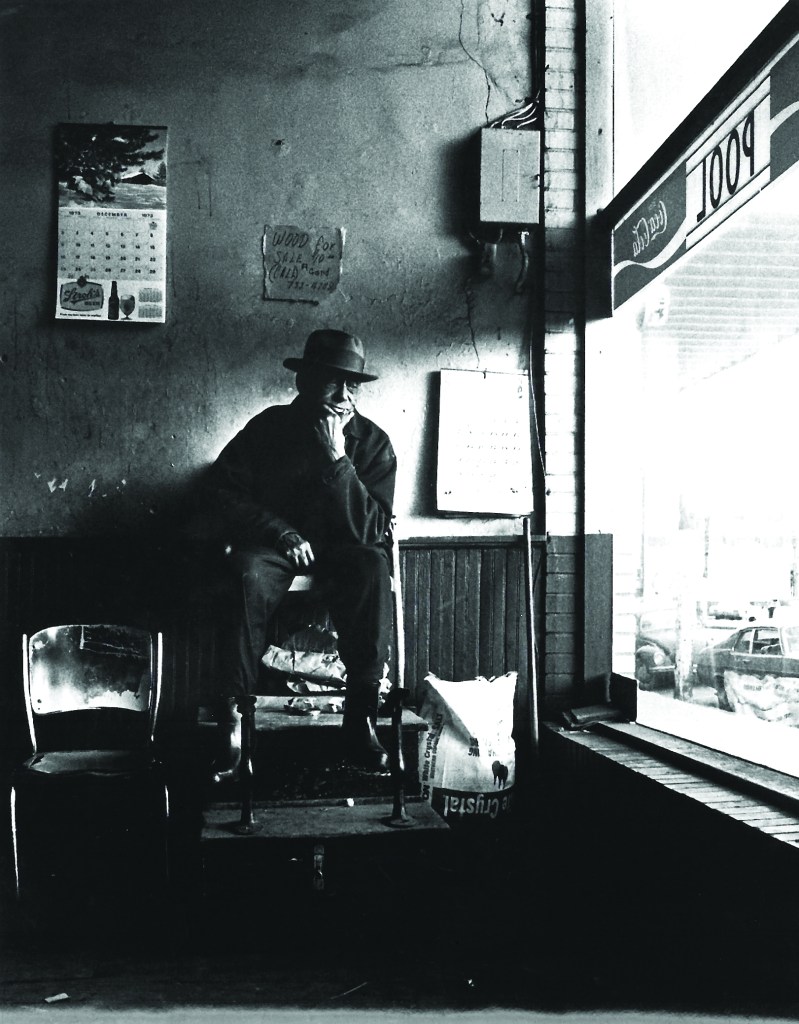
One location that West liked to visit to photograph was Davidson’s Pool Room in downtown Corydon, which was established in 1932 and closed in 1983. Pool halls were once found in most towns and cities throughout the U.S. and were often regarded as dens of moral corruption. Davidson’s, too, was a fabled place of notoriety and legend.
According to the historical marker placed on the old site by Harrison County Bicentennial Committee Historian Bill Brockman, “Davidson’s was a narrow, smoke-filled room, but spanned 99 feet between its entrances on Chestnut and Beaver Streets. It provided a convenient place for grown men to meet, play pool and swap stories.”
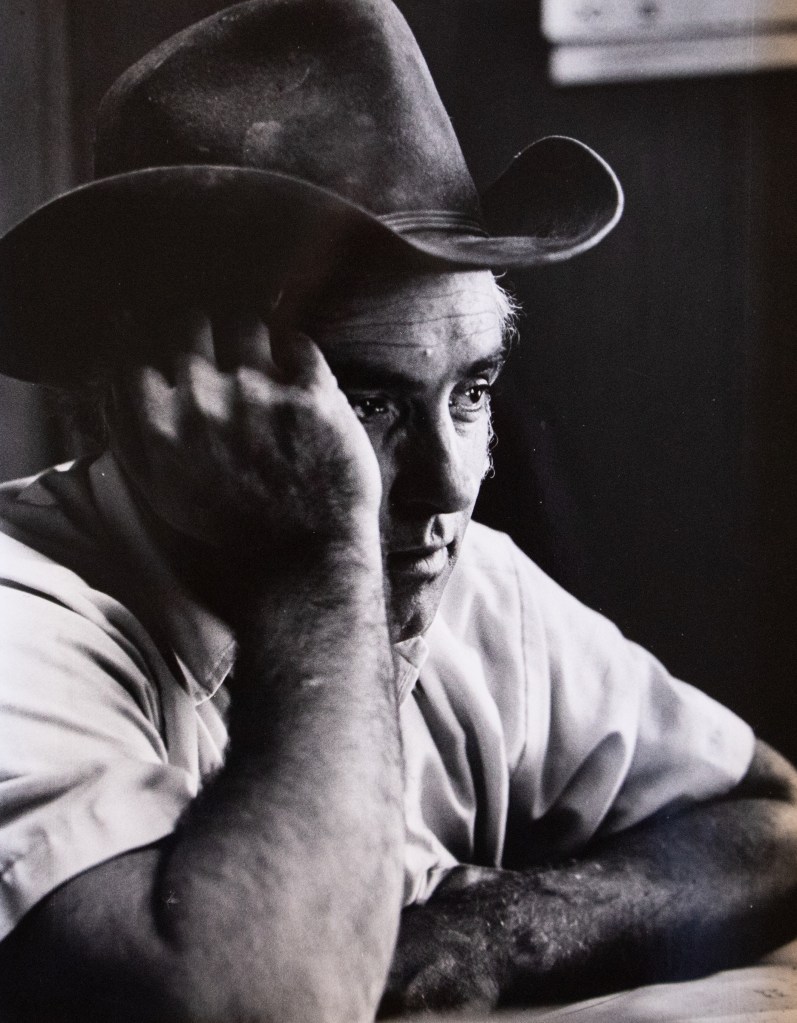
“The light in there was unique,” West said. “The big plate-glass windows on each end allowed light to pour into the gloomy interior creating striking shadows.”
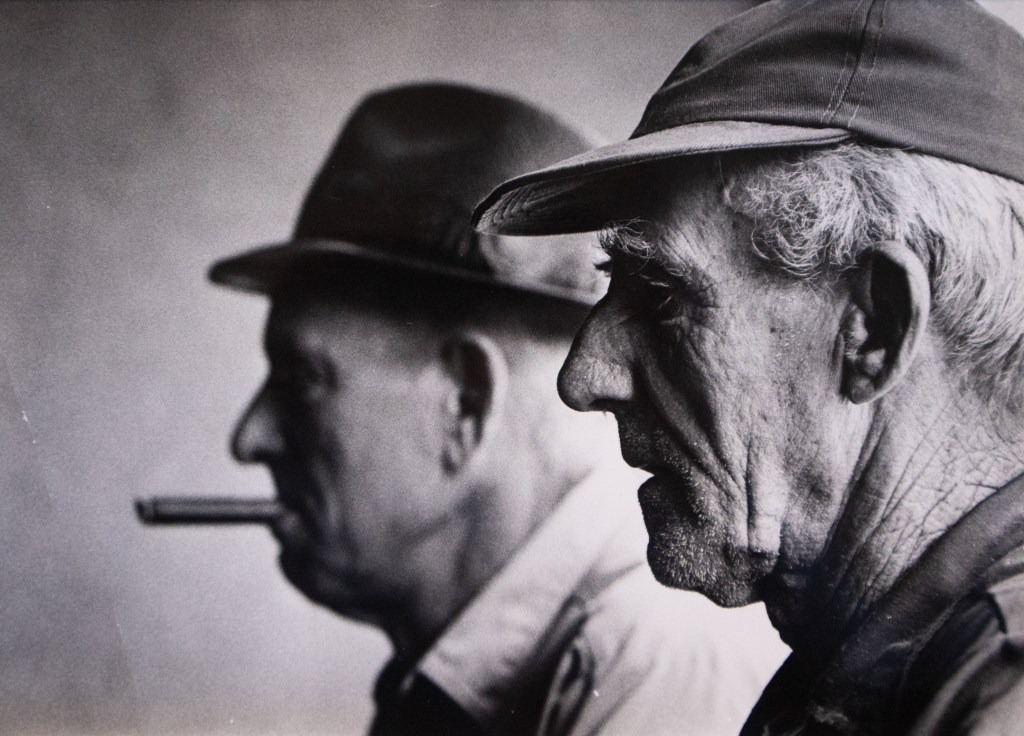
West used the light to capture the intensity of the lined faces of cigar-smoking regulars watching an eight-ball tournament. His 1974 photo of Frank Scott, 88, caught the subject in an intimate and still moment of solitude, half in shadow as he sits by the window keeping an eye on what is happening in town.
“Frank often came to Davidson’s pool hall to see his friends, and occasionally comment on a game,” West said.
The traditional barbershop is another place that caught West’s eye. A 1991 photo of Voyles Barbershop, “A Cut Above,” shows John Voyles, 41, and his father, Carl, 72, keeping things light at their business in Palmyra. “Carl played his fiddle on slow days,” West said, “reminiscent of barbershops in the early 20th century where men gathered, socialized and sang.”
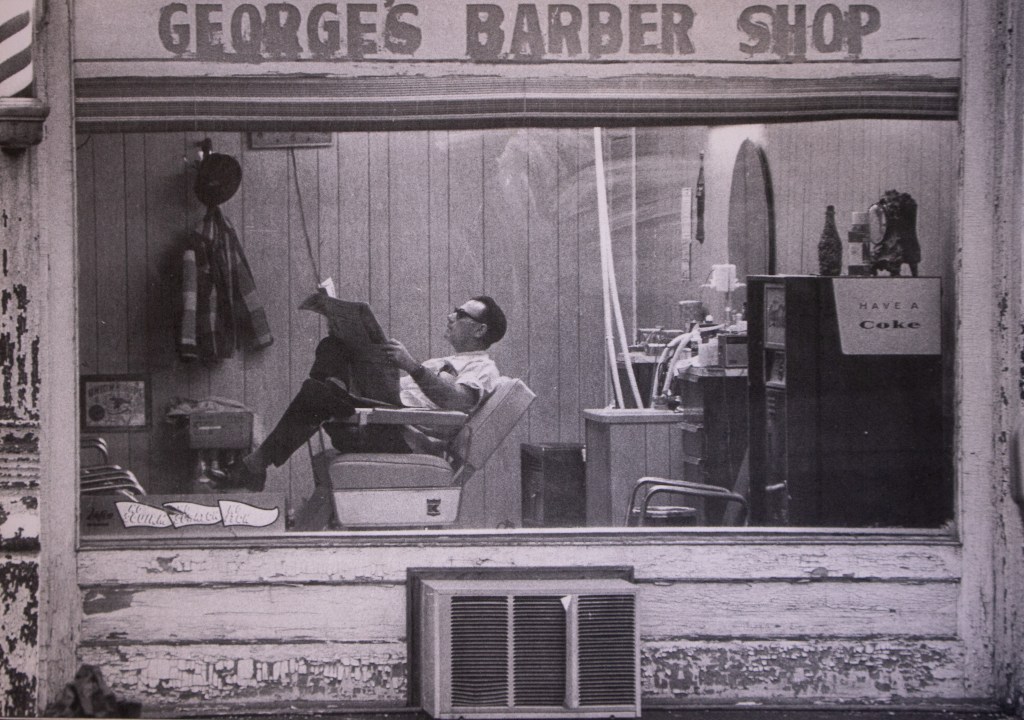
A 1974 photo of George’s Barbershop, in downtown Corydon, was taken as a passerby might see it on a Saturday morning. West’s photo is framed so the viewer focuses on barber Carl Lofton sitting back in the chair and brushing up on the news before his first customer.
“The traditional barber was expected to know the news of the world, everything going on in town, and have a witty answer for everything,” West said. It had both more and less to offer than today’s unisex “salons,” “style shops” and “hair studios.”
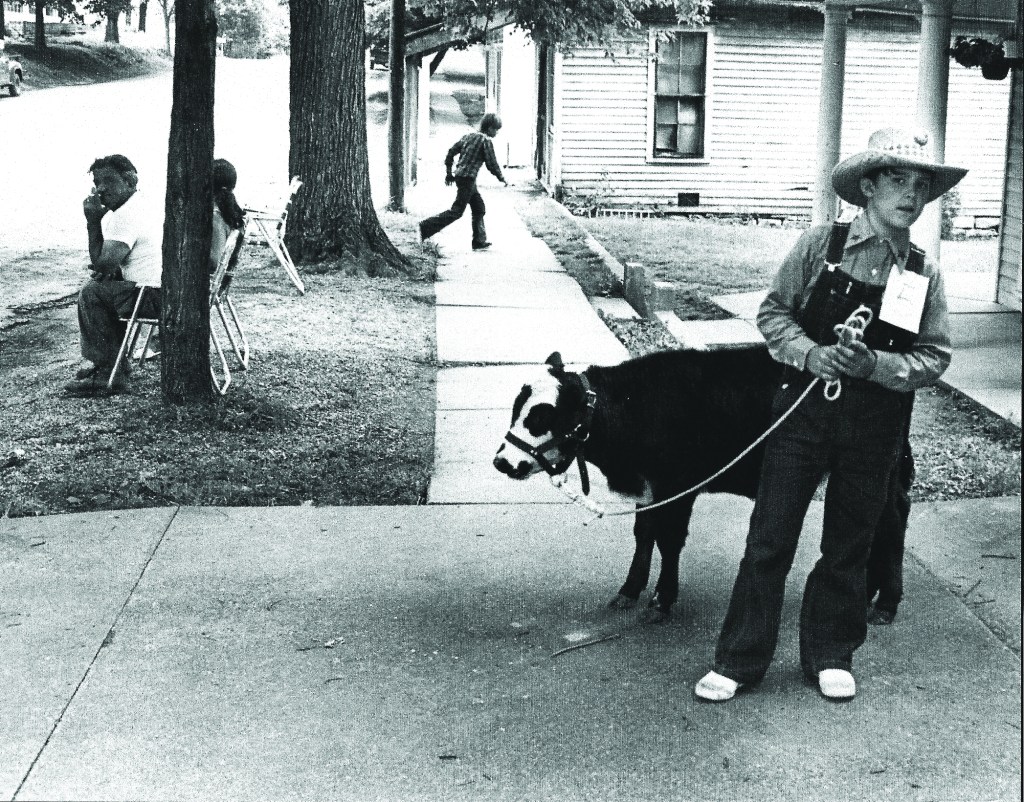
Children and their pets figure in several of West’s photos in the exhibit. A 1976 shot of 9-year-old Peter Bush holding on to Twister, his Hereford Angus calf, is masterful. Taken just before the Pet Parade begins on the Fourth of July in Laconia, the photo captures the slow pace and relaxed, magical vibes of small-town life.
West’s collection also includes photos of well-known historical figures of Harrison County, including Frank O’Bannon (1930-2003), former governor of Indiana; Fred Griffin (1915-2008), a local historian; Wilfred Sieg Sr. (1931-2006), “Cousin Willie” of Ramsey Popcorn; and many more.
West did not set out to be a photojournalist. His father bought him his first camera — a 35 mm Pentax — in Hong Kong when West was in college. “I spent many happy hours taking pictures with that camera,” West said, “but I did not associate it with a career. I was studying to be a history or English teacher.”
Out of college, West was hired to teach English at Corydon Central High School where he was also asked to teach a journalism class. “I received a crash course in operating the school’s vintage Rolleicord camera by a student, Bonita Brockman, and basic darkroom organization by the principal, Earl Saulman,” West said. “After that, it was just trial, error and perseverance.”
The summer after his first year of teaching, in 1968, West enrolled in a basic photojournalism class at Indiana University, in Bloomington, to sharpen his skills.
“This class changed everything for me,” West said. “Dr. Wil Counts, the professor, introduced us to the work of the Frenchman Henri Cartier-Bresson, often called the father of modern photojournalism. I immediately became a huge fan of his work and his ideas.”
Bresson pioneered the genre of street photography and thought the photographer should capture a “decisive moment.” He saw the camera as an instrument of intuition and spontaneity, and the photographer as master of the instant. For Bresson, the photo happens in a creative fraction of a second, and not in the darkroom, through cropping and manipulation.
Two years later, when West was hired as editor of The Corydon Democrat, it was these ideas of Cartier-Bresson that inspired him.
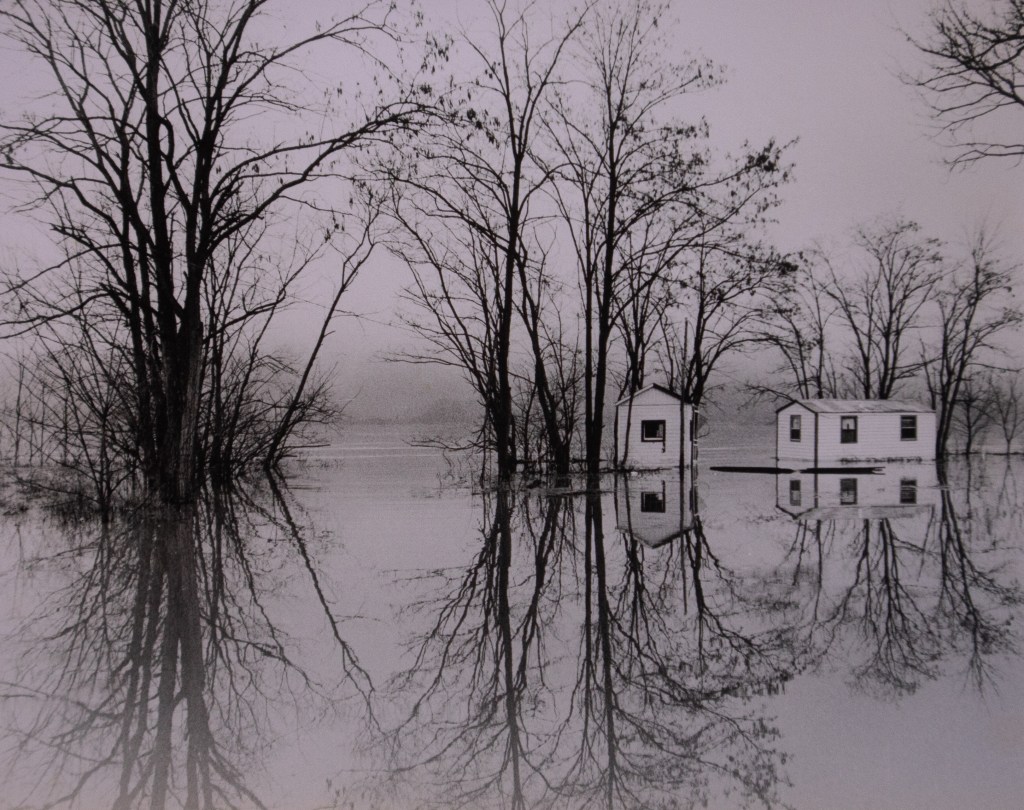
In a 1989 photo of Raymond Cotner’s fish camps at New Amsterdam, West captures the “decisive moment” when Ohio River floodwaters come right up to the camps. The photo taps the exquisite beauty of the location and evokes a complex mood with the fog, barren limbs and low light, all seen as they are and as reflected in the river.
West believes that his job as editor of The Corydon Democrat was the best job in the world for him and that he was lucky to have it. “I could pretty much do what I wanted, within reason,” he said. “I loved to take pictures and write stories, and could decide when and how they appeared in a paper that people read. What’s not to like?” •
Story by Judy Cato
Photos by Lorraine Hughes
.
 silivingmag.com