
Southern Indiana Artist Potter Monte Young
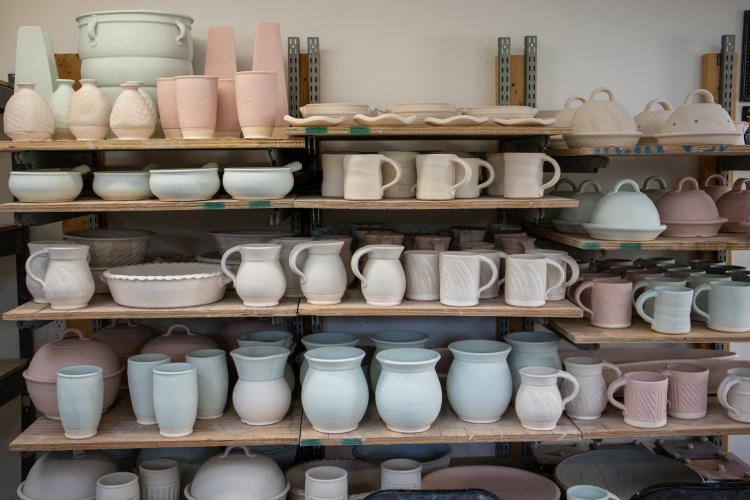
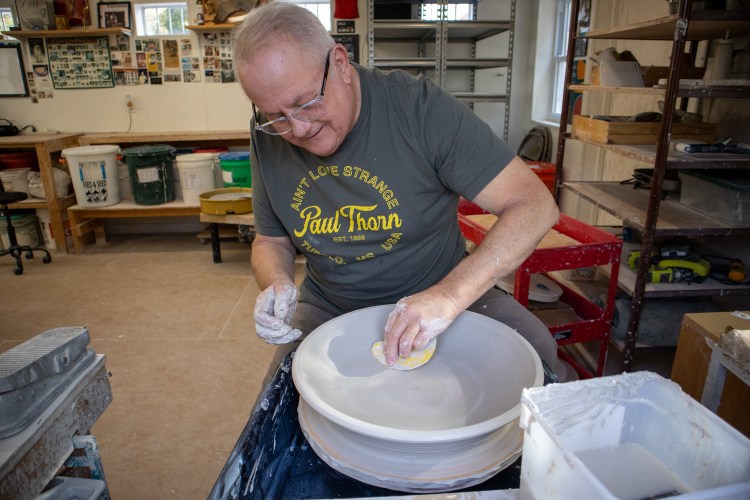
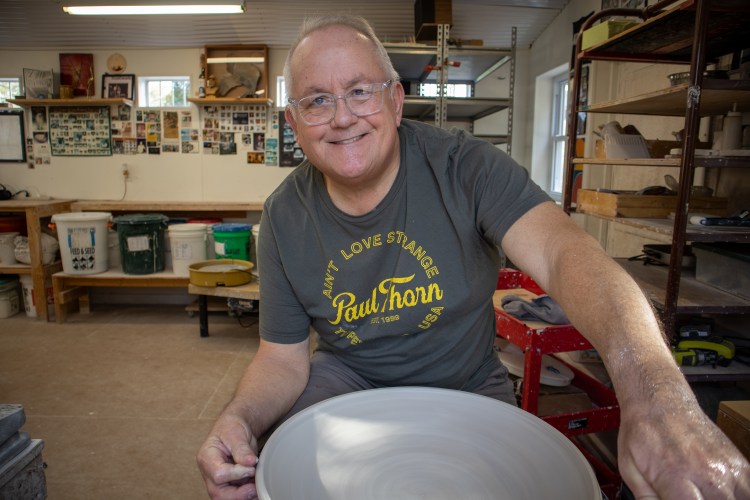
Potter Monte Young and his wife, Julie, originally from Iowa, moved from Minneapolis to the scenic environs of Jasper in 2013 to live close to their children and grandchildren, and to build their forever home and studio.
“During my 30-plus year career in manufacturing, I moved my family 11 times across four states. During those years, I had always kept some sort of pottery studio to practice my lifelong hobby/dream job, but my former studios had always been temporary and barely adequate for my needs.”
“During my 30-plus year career in manufacturing, I moved my family 11 times across four states,” Young said. “During those years, I had always kept some sort of pottery studio to practice my lifelong hobby/dream job, but my former studios had always been temporary and barely adequate for my needs.”
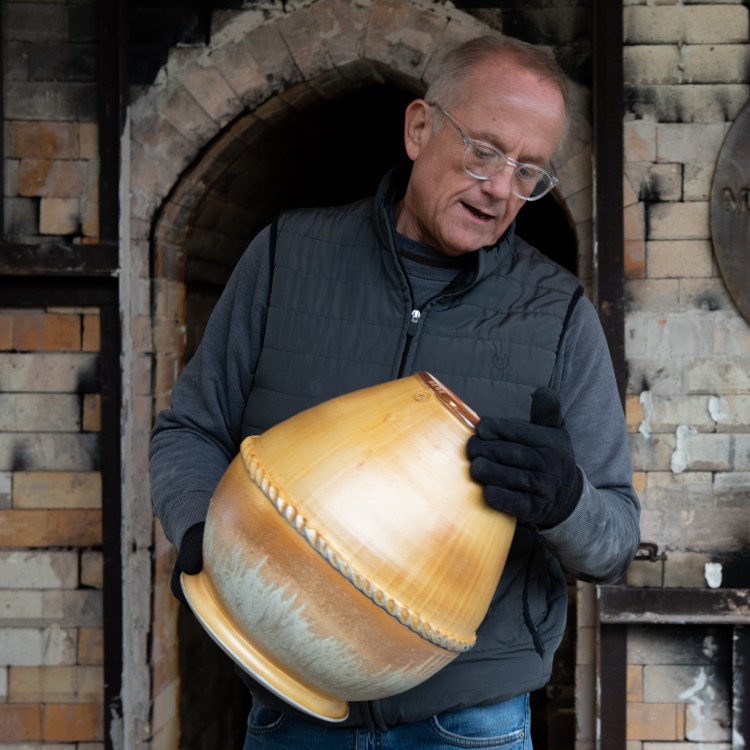
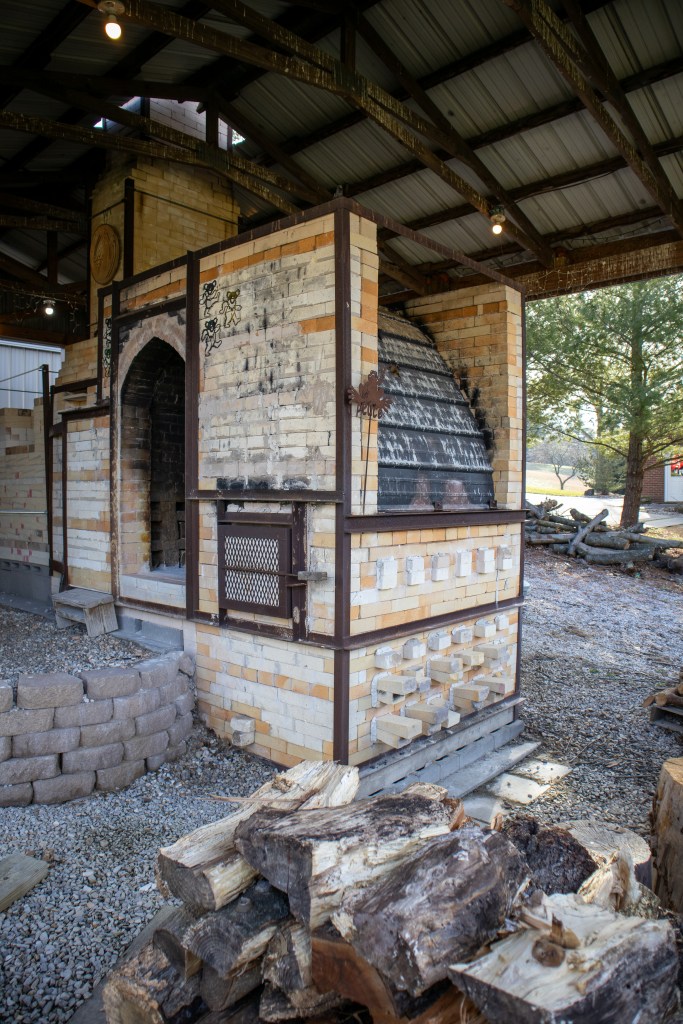
Once settled in his new and permanent studio in Jasper, Young built his long-coveted piece of equipment: a 65-cubic-foot wood-burning kiln located a few steps from his studio.
“It took two weeks for a couple of potter friends and I to build it,” Young said. “Our first firing was in 2015.”
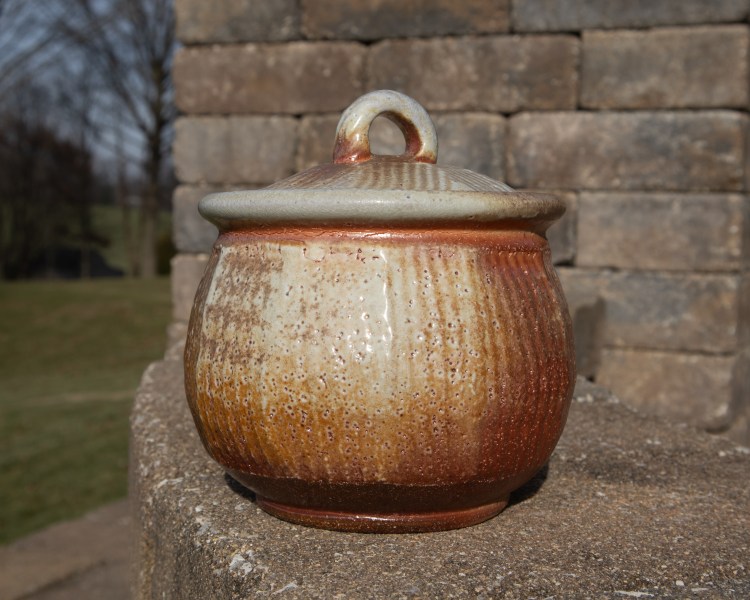
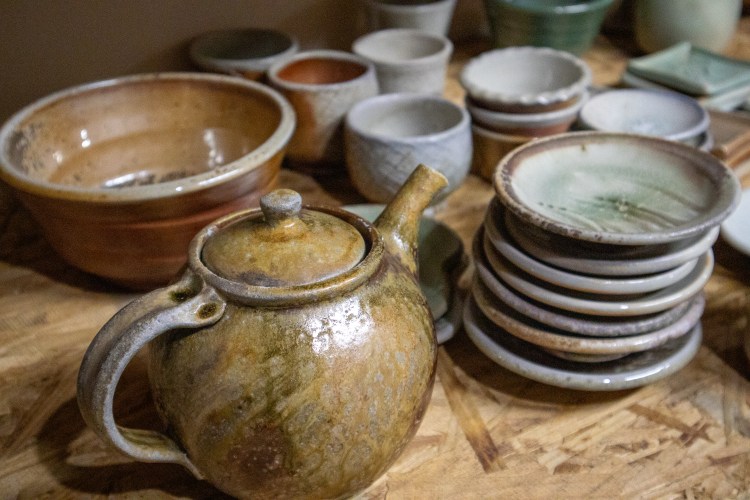
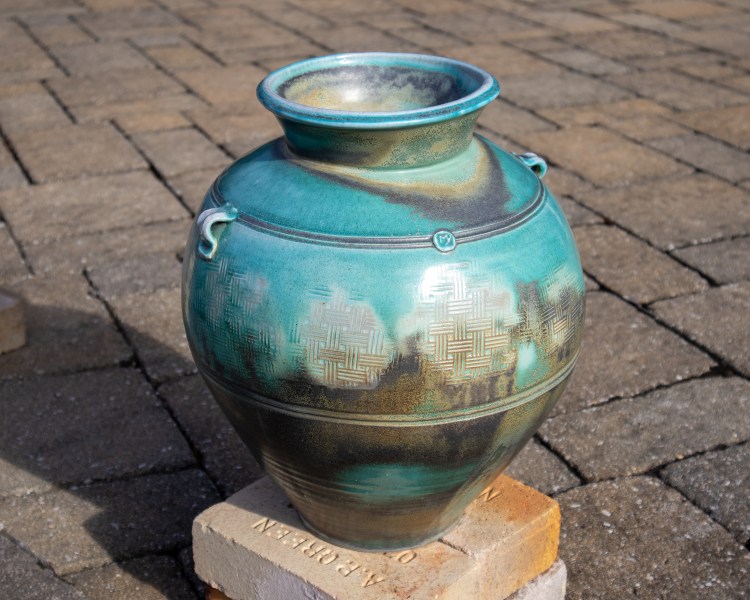
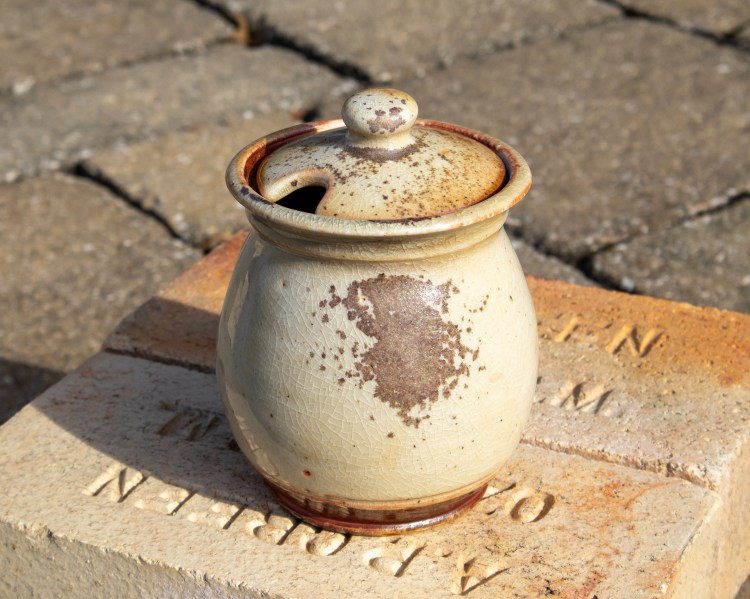
Young now specializes in wood-fired stoneware with minimal earth-toned glazes and a rustic Japanese aesthetic. All of his pottery is created for everyday use.
“When I was a student, I encountered the wood-fired pottery of a rural village in Japan called Mashiko that made a deep and lasting impression on me.”
“When I was a student, I encountered the wood-fired pottery of a rural village in Japan called Mashiko that made a deep and lasting impression on me,” Young said. Mashiko is internationally renowned for its durable rustic wood-fired pottery that was popularized by Shoji Hamada, who was designated in 1955 as a “Living National Treasure” of Japan. He died in 1978.
In 2011, Young became friends with the Wisconsin potter Randy Johnston, who had studied in Mashiko at the pottery studio of Shimaoka Tatsuzo, who had been a student of Shoji Hamada.
“Johnston’s work has also influenced me,” Young said. “I own several of his pieces, and he offersfeedback on my own work.”
When discussing how he shapes raw clay into form, Young circles back to talk about his life’s trajectory and his early years. In 1987, Young made the decision to take a job in manufacturing for his family’s financial security. This job morphed into leadership roles across four different industries. His passion, though, had always been for a career making pottery.
He earned a BFA at the University of Northern Iowa, specializing in ceramics. After a brief stint owning his own pottery business, he took a job as a production potter at Earthworks in Alexander, Iowa.
“At Earthworks, I was engaged in repetitive throwing on the wheel to an exact dimension,” Young said. “All that practice has been the key to my forms.”
Young went on to quote Hamada to elaborate further on this point. Hamada had said, “Technique and skills must be absorbed, wrapped up and put away to become an integral part of yourself that will be revealed in your work without thought.”
Young went on to quote Hamada to elaborate further on this point. Hamada had said, “Technique and skills must be absorbed, wrapped up and put away to become an integral part of yourself that will be revealed in your work without thought.”
After Young forms enough pots to fill his small electric kiln, he initiates the bisque firing, a vital first step that makes the pieces porous enough to hold glaze.
“Glazing is minimal,” Young said. “I even leave some pots bare, allowing the wood kiln’s natural ash to create a unique rustic glaze.”
The artist’s wood-burning kiln is fired approximately three times a year. “Preparing the pots for this final step is time-consuming and labor-intensive,” Young said. “Because the temperature in that kiln reaches 2,300 degrees F, each pot has to be fitted with little feet, called wadding, to keep the pots from sticking to the shelves. The wadding is made from sawdust, silica sand and clay and can be easily removed from the finished pieces.”
Wood-fired pottery is an ancient art form, connected to the roots of ceramics. It also has a communal nature, requiring teamwork, because one person cannot do it alone. Young invites other potters to add some of their pieces to his kiln in exchange for their help.
Wood-fired pottery is an ancient art form, connected to the roots of ceramics. It also has a communal nature, requiring teamwork, because one person cannot do it alone. Young invites other potters to add some of their pieces to his kiln in exchange for their help.
The firing lasts two days. The kiln is loaded with 250 pots, the opening to the kiln is sealed shut brick by brick, the wood is loaded into the firebox, set on fire, and smoke begins billowing from the chimney.
This fire must be kept burning around the clock for the duration of the firing, so the potters must take shifts tending the fire. “It takes four truckloads of wood per firing,” Young said. This area is rich in oak, maple and ash. Friends, family and neighbors keep me supplied with their salvaged wood.”
These same people and more also show up for the wood firings, where there are often artist demonstrations, wood-fired pizza, and artists selling their wares. The excitement begins to build when the kiln is unloaded and the never-before-seen pieces are revealed. “As wood burns, it releases minerals in the form of vapor, which creates a unique movement and expression of life absorbed by the pots,” Young said. “There are flashing effects on the pots by the fire and ash –kissed glaze on those furthest away. That is the magic that drew me to wood-fired pottery.”
Young’s passion for making pottery began when he was in junior high school, and one of his teachers offered pottery classes.
“I still remember carrying those finished pots home mesmerized by the magic of how the kiln transformed the raw glaze into the shiny finished product. That teacher changed my life.”
“I still remember carrying those finished pots home mesmerized by the magic of how the kiln transformed the raw glaze into the shiny finished product,” Young said. “That teacher changed my life.”
Although Young has held a full-time job since 1987, he disciplined himself to get up early and work in his pottery studio for two or three hours before going to work. He also worked there again in the evening. “I inherited a strong work ethic from my father,” Young said. “Although he wasn’t an artist, he supported my decision to major in art. I have carried through on that.”
One thing that brings Young a lot of satisfaction these days is the reviews he receives on Etsy, where he sells his pottery.
“It makes me very happy to hear how much other people enjoy the work I have created.” •
For more information on Monte Young Pottery, visit monteyoungpottery.com.
Story by Judy Cato
Photos by Lorraine Hughes
.
 silivingmag.com