
A Walk in the Garden with Bob Hill
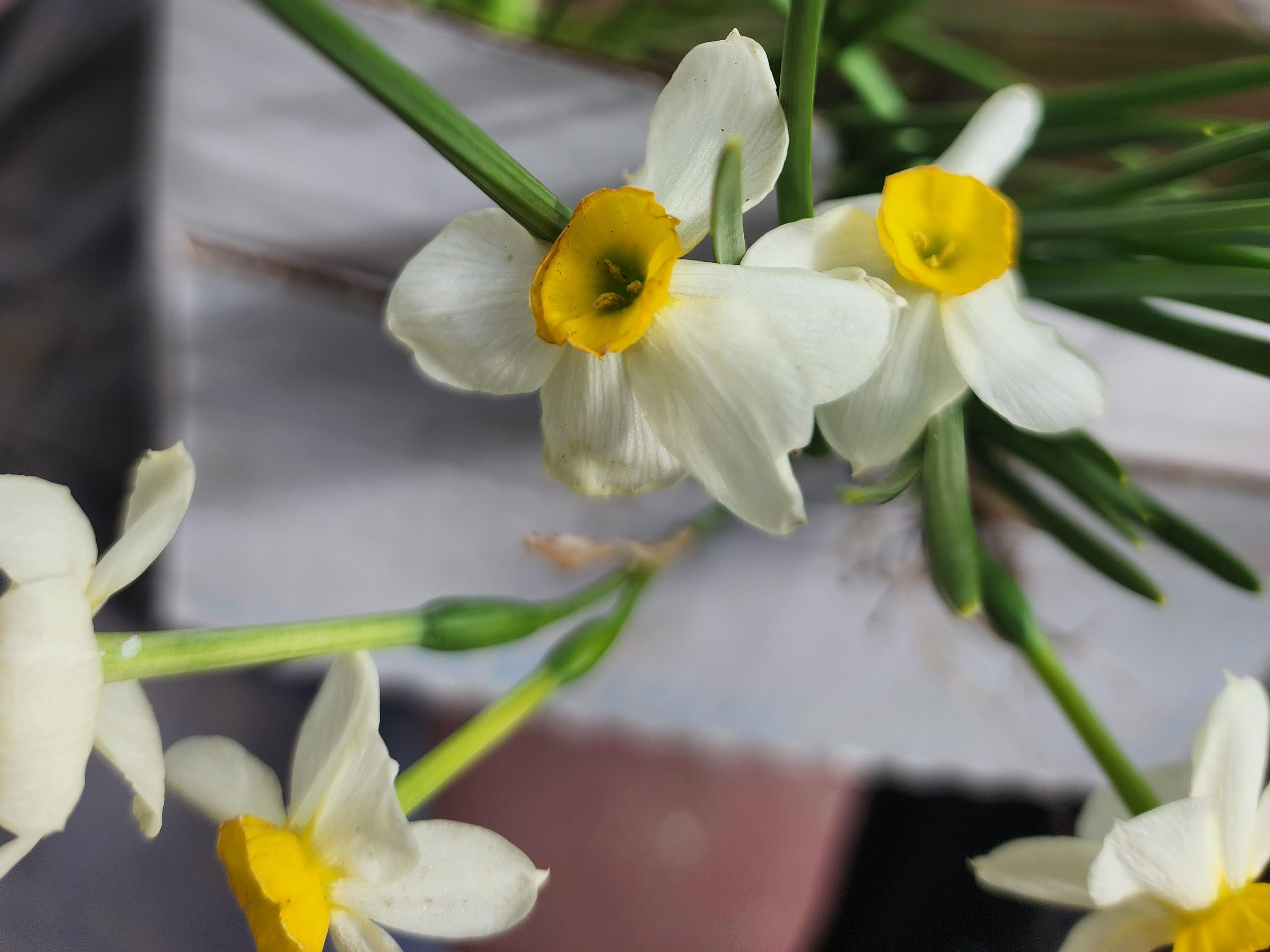
Even while enjoying spring flowers in our yards, we tend to think of them as just former temporary residents of box stores such as Lowe’s or Menards, the local nursery or a UPS truck. It’s our turn to raise them. We don’t give them their due sense of place in world history. We don’t know anything about it.
I got to thinking a little deeper about that while thinning out and dividing daffodils at our new house in town. They had probably been living in the same dirt near the front sidewalk for at least 20 to 30 years, once young and spry, heralding spring and leading the neighborhood garden parade. When we first met — with my shovel in hands — these daffodils had lost all vigor, had become thickly packed and droopy, with only a few flowers blooming with a fat cluster of bulbs.
My necessary mission was to dig up that fat cluster — one of many in the yard — then salvage the best and chuck the rest. Pick the best five to seven daffodil bulbs, dig a new hole with space to breathe and grow and replant. There is some satisfaction there, with only another maybe 350 shopping days until the next renewed crop appears in spring ’27.
My necessary mission was to dig up that fat cluster — one of many in the yard — then salvage the best and chuck the rest. Pick the best five to seven daffodil bulbs, dig a new hole with space to breathe and grow and replant. There is some satisfaction there, with only another maybe 350 shopping days until the next renewed crop appears in spring ’27.
I had been doing much the same with totally overgrown patches of daylilies and “surprise lilies,” actually amaryllis that toss up enormous heaps of leaves in spring that die back, then offer tall, elegant pink flowers in late summer.
I felt a little guilty tossing away the hundreds of weaker, nutrition-starved plants but did manage to give many to another gardener with way too much time on his hands.
So, I’m sitting on the back porch steps looking over that first dug patch of daffodils and beginning to have guilty thoughts about chucking them, needed or not. They were brave survivors, their central flowers bright yellow, their petals a clean white. They had been neglected. Forgotten. Not their fault.
These daffodils sitting in my lap were of an older variety. We had grown similar-sized, pure white daffodils in our former home. They were at least 75 years old, maybe even older than me, now a slightly worn 83, but also not ready for the discard pile.
These daffodils sitting in my lap were of an older variety. We had grown similar-sized, pure white daffodils in our former home. They were at least 75 years old, maybe even older than me, now a slightly worn 83, but also not ready for the discard pile.
So, needing a little perspective, I began some research on daffodils. They are native to the Mediterranean area, going back thousands of years in Spain, Portugal and North Africa. The name “daffodil” derives from the 14th century Middle English “affodil,” a type of lily. The Dutch added the “d.”
Their biological name is Narcissus, which recalls a very handsome young man in Greek mythology who was tricked into falling in love with his own reflection in a pool of water. The bad news is he became so consumed with himself, his image, that he ignored all outside attention. He didn’t even take time to eat and died of starvation and thirst while perched on the edge of a pool of water. He had no sense of irony. You may know the type.
It gets worse. Narcissus derives from the Greek “narco,” or narcotics. All parts of the plant are somewhat poisonous. The plants first got to Britain carried by Roman soldiers, who planted them in remembrance of fallen comrades. At least the flowers did get to come back every year. The soldiers also thought the lethal daffodil sap would help heal wounds.
Whoops.
History marched on. The daffodils made their way from Europe to American on boats with our 18th-century settlers. They found presidential homes at Mount Vernon and Monticello and then, as the breeders took hold, at the Brent & Becky’s bulb store, if not a backyard in Southern Indiana where they multiplied mightily in place for decades. Our house is almost 100 years old. Who first planted the daffodils here? What was their story?
History marched on. The daffodils made their way from Europe to American on boats with our 18th-century settlers. They found presidential homes at Mount Vernon and Monticello and then, as the breeders took hold, at the Brent & Becky’s bulb store, if not a backyard in Southern Indiana where they multiplied mightily in place for decades. Our house is almost 100 years old. Who first planted the daffodils here? What was their story?
Meanwhile, daffodil breeding became a craze. There are now more than 32,000 named hybrid cultivars, although most are still variations of yellow, orange, white and salmon. Their names include Peeping Tom, Jetfire, Pinball Wizard and Spoonful. Also “Dr. Bob” and, this hurts, “Bob Minor.”
Growing close to those same back porch steps is a bright white patch of candytuft, or “iberis,” to those same Roman soldiers. It’s a spring favorite, almost radiant white and spreading nicely. It eventually got to a Southern Indiana backyard by way of Iberis near the Mediterranean Sea. It first got to England in 1587, where it became used to treat gout and rheumatism, and who knows why? It became popular as an edging plant in American gardens in the Victorian Era, having arrived here as part of the historic Virginia Company. Mine came from a nursery in Ohio, slowly making its way west.
On the other side of our porch is a brightly blooming purple lily, among the oldest cultivated plants in the Northern Hemisphere; one of the images of the same appeared on a fresco in Crete from around 1580 B.C.
Yet nothing adds more perennial history to my backyard than a few hundred daylilies, which have been raised in various gardens for more than 4,000 years, primarily in China, Japan, Korea, and, talk about hardiness, Siberia.
They made their way to Europe in the 16th century, then came over with our ancestors along the East Coast before heading inland to the Ohio River Valley. There are now more than 100,000 registered cultivars, with several thousand new ones added every year.
Their names include “Primal Scream,” “Ridiculous” and “Merry Moppet.” There is also a “Ranger Bob” selling for only $12 to $20, a major league pick. •
Story by Bob Hill

