Behind the scenes with Textile Artist Rita Koerber
In 1994, Rita Koerber walked into a quilt shop in Walnut Creek, California, looking for fabric, unaware she was stepping into her future. At the time, Koerber was a designer refurbishing discarded chairs for her business, Feather Your Nest — a venture so successful its innovative work was featured in Architectural Digest. But pinned to the shop wall was a vibrant, folk art Noah’s Ark quilt that stopped her in her tracks.
Seeing her fascination, the perceptive shop employee, Sandy Klop, pointed to a flyer advertising an upcoming class. “You should take it,” Klop urged. Koerber hesitated, admitting she knew very little about quilting. “I’ll teach you everything,” Klop promised. That single encouraging interaction instantly shifted the trajectory of Koerber’s life, unlocking a passion for color and textile art that would redefine her next three decades.
Hooked from the very first lesson, Koerber carved out precious pockets of time within her busy schedule to master her new craft. Quilting quickly grew from a side interest into a daily necessity. When her husband, Jim, was relocated to Indonesia in 1997, she knew she couldn’t leave this new calling behind.
Anticipating empty days in an unfamiliar land, Koerber made the audacious decision to pack up and ship her entire quilting studio across the Pacific to an encampment in Sumatra. There, an unexpected surprise awaited. Within the camp was a thriving quilting group that brought together local Indonesian women and expatriates from nearby Pekanbaru.
Rather than feeling isolated, Koerber was instantly swept into a vibrant, multicultural community that profoundly influenced her artistic direction.
Rather than feeling isolated, Koerber was instantly swept into a vibrant, multicultural community that profoundly influenced her artistic direction. This influence deepened when a fellow expatriate introduced her to the book “Design Your Own Quilt,” encouraging her to move beyond commercial patterns and create her own designs.
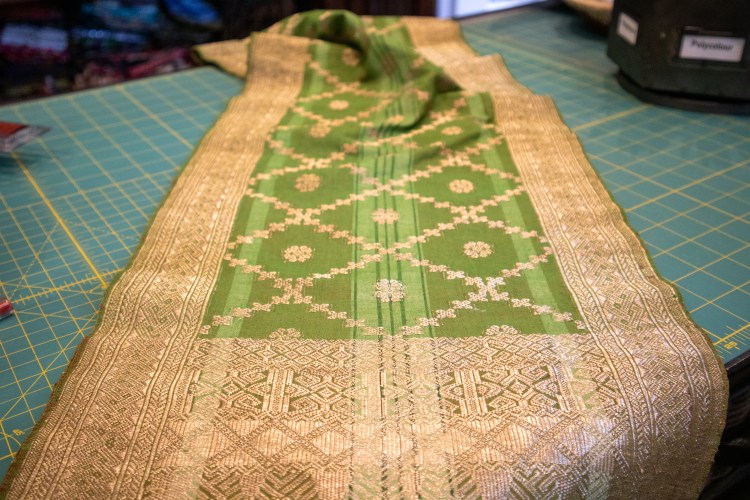
She also travelled to Bukittinggi, where she discovered traditional batik and richly woven songket textiles accented with metallic threads. These distinctive fabrics became lasting influences in her work.
In 2002, Koerber returned to Jim’s hometown roots in Southern Indiana, where she spent hours sewing her Indonesian fabrics into functional items — table runners and quilts — blending local Midwestern utility with the raw materials she worked hard to find abroad.
In 2005, the couple moved to London, where extensive travel throughout Europe exposed her to centuries of textile traditions. Those experiences broadened her artistic vision and deepened her appreciation for craftsmanship.
Following Jim’s retirement in 2007, the couple returned permanently to Harrison County while continuing to spend part of each year in Santa Fe, New Mexico. Koerber established a studio there and drew inspiration from the city’s galleries, Southwestern architecture, Native American and Hispanic artistic traditions, and the vibrant community of artists. Santa Fe became another important influence, complementing the perspectives she had gained in Indonesia and Europe.
Returning home, Koerber brought with her not only treasured fabrics but also a global artistic perspective. Her work gradually evolved from functional quilts into museum-quality textile art. In 2010, her quilt “Our Lady and the Souls” was accepted into the collection of the Cathedral Basilica of St. Francis of Assisi in Santa Fe, New Mexico.
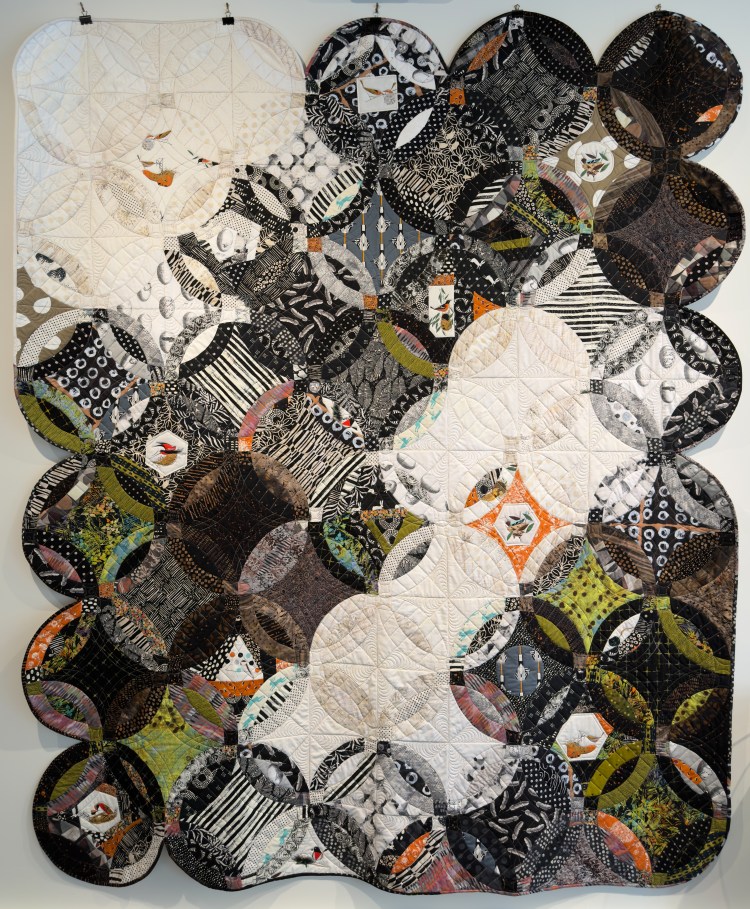
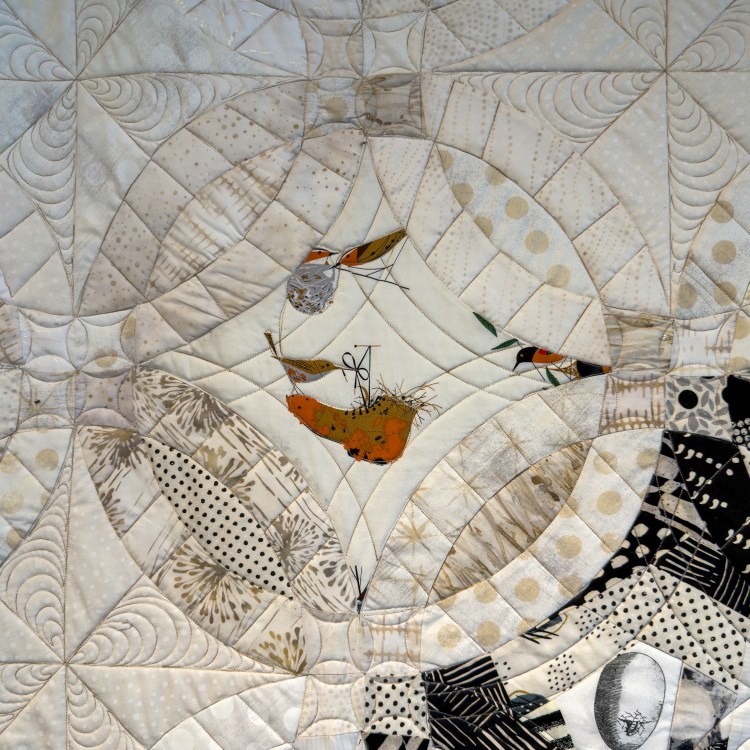
Koerber’s quiet dedication reached a high point in her 2026 quilt “Charley’s World,” where she translated the visual language of iconic wildlife illustrator Charley Harper into an 86by-101-inch double wedding ring quilt. The famous illustrator was known for reducing his animal subjects to their simplest visual terms: “flat, simple and funny,” as he put it. After receiving a piece of fabric that reproduced Harper’s art, Koerber strategically spaced pieces of that fabric into a quilt composed of mostly curved elements, replicating the fluid motion that echoes the natural world. In her artist statement, she observed that “the piece reflects both the playfulness and quiet restraint found in Harper’s imagery.” One recurring playful image from the Harper fabric is of a bird tugging at the shoestring of an old shoe — turned nest — as if it were a stubborn worm.
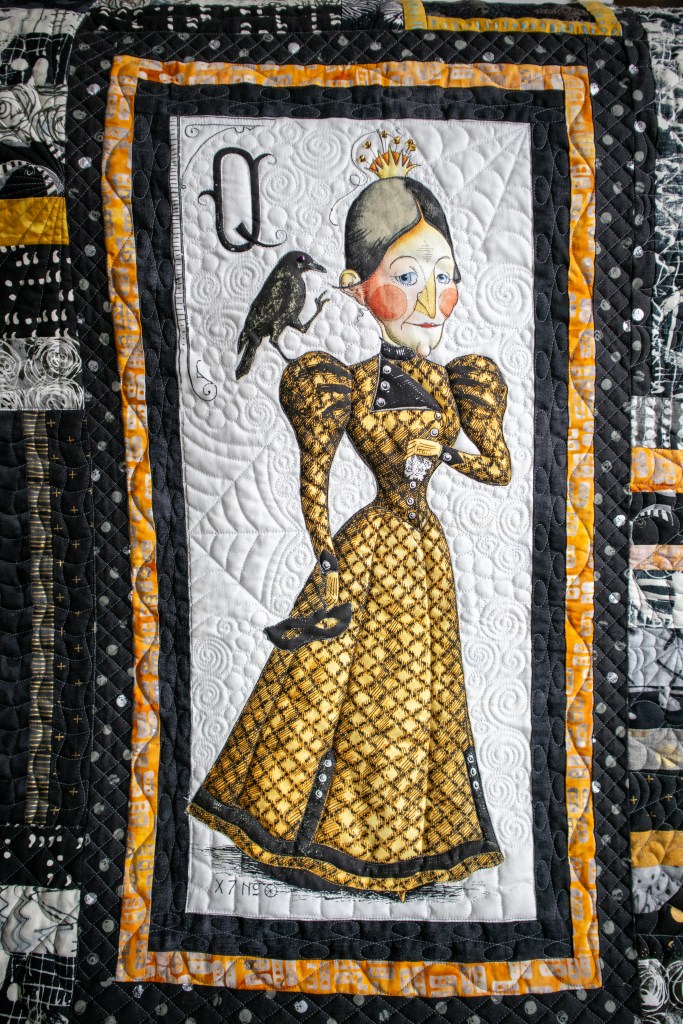
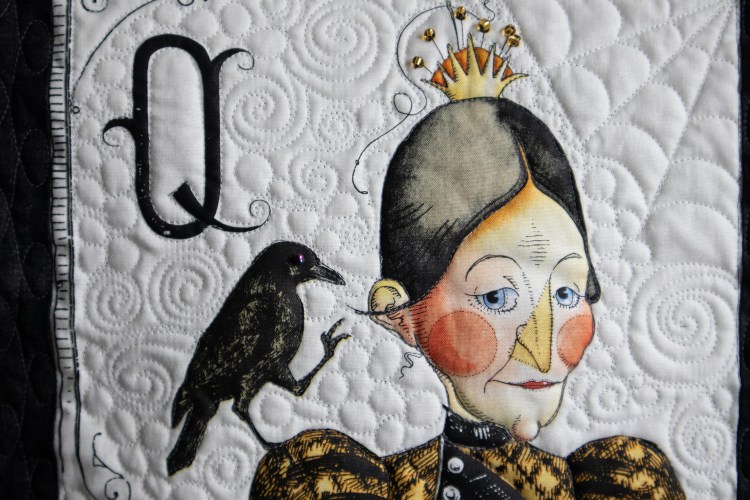
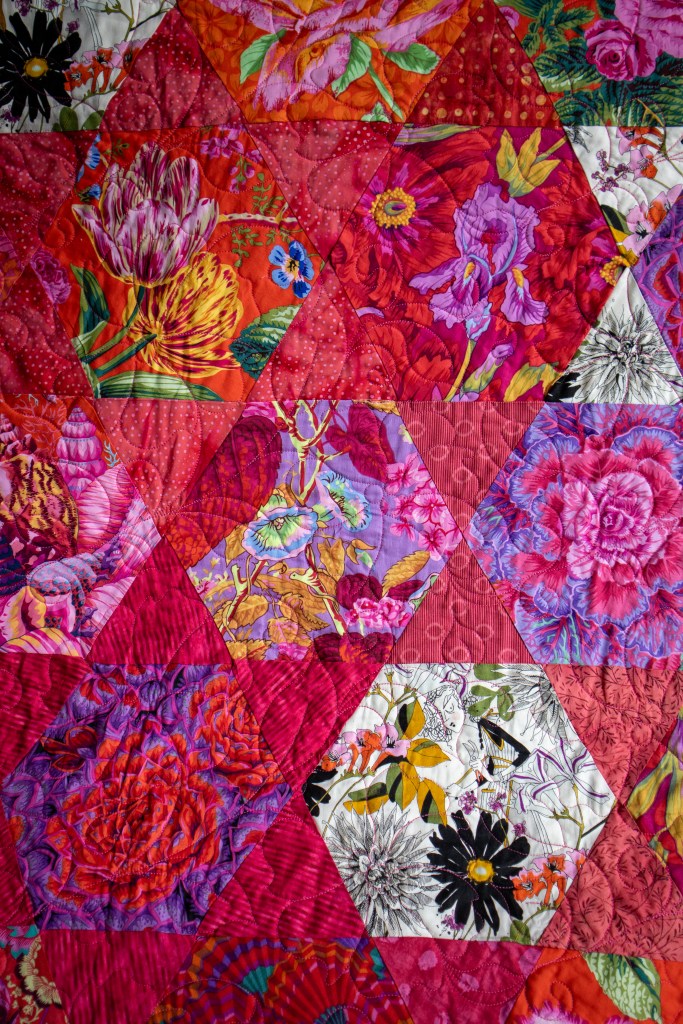
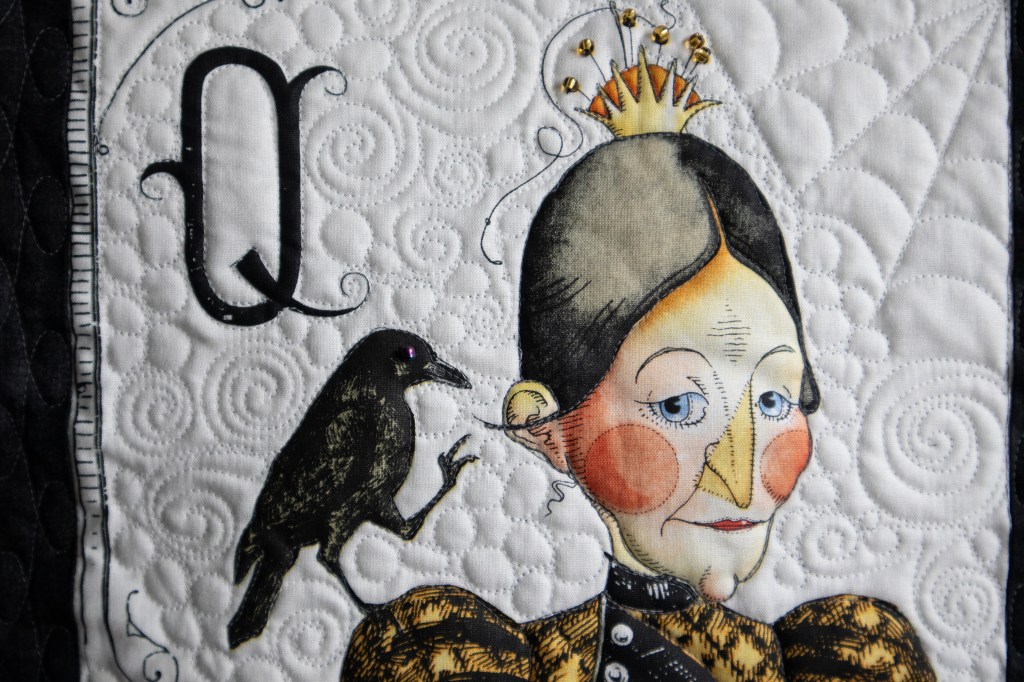
“Charley’s World” stands as a vibrant testament to Koerber’s philosophy that a quilt should deliver an experience of joy, color and a bit of humor. Her colorful portfolio also includes “Snip, Snip,” inspired by Alexander Henry’s “The Ghastlies” collection, and “Four Queens,” where carefully placed beads and jewels transform playing-card royalty into richly embellished works of textile art.
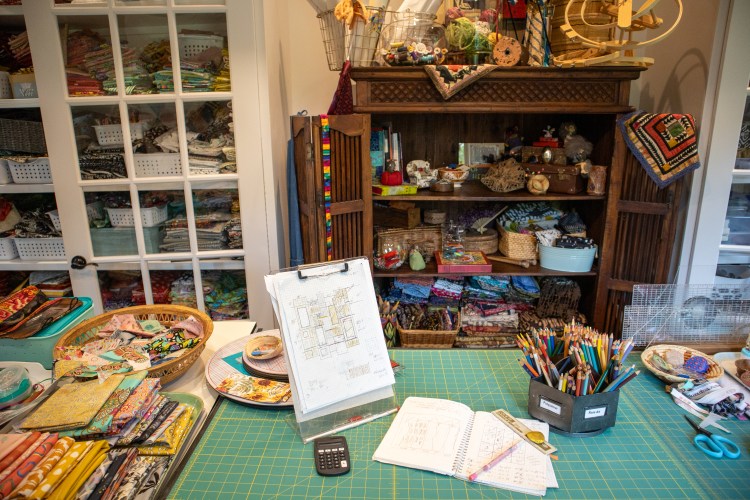
Behind this kaleidoscope of color lies a deeply disciplined creative process. To protect her time and materials, Koerber sketches every initial concept on simple graph paper.
Behind this kaleidoscope of color lies a deeply disciplined creative process. To protect her time and materials, Koerber sketches every initial concept on simple graph paper. “It is easier to erase a line than to tear out a stitch,” Koerber noted practically. Even when traveling, she always carries a sketchbook, a mechanical pencil, a six-inch ruler and a calculator, ready to capture unexpected inspiration.
“Every creation moves through three distinct emotional phases: the initial surge of excitement, a heavy period of doubt where structural problems must be solved, and the final triumphant drive to the finish line.” – Rita Koerber
“Every creation moves through three distinct emotional phases,” Koerber said: “the initial surge of excitement, a heavy period of doubt where structural problems must be solved, and the final triumphant drive to the finish line.”
This intense artistic journey was best captured during her time in Sumatra, when an Indonesian woman in her sewing circle remarked, “I always know where you are on a quilt by the music you are playing.”
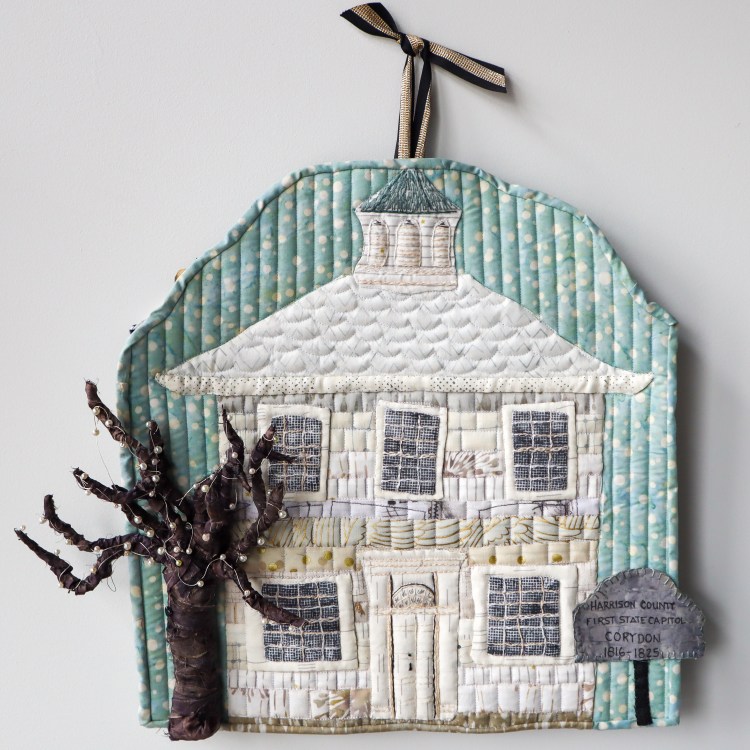
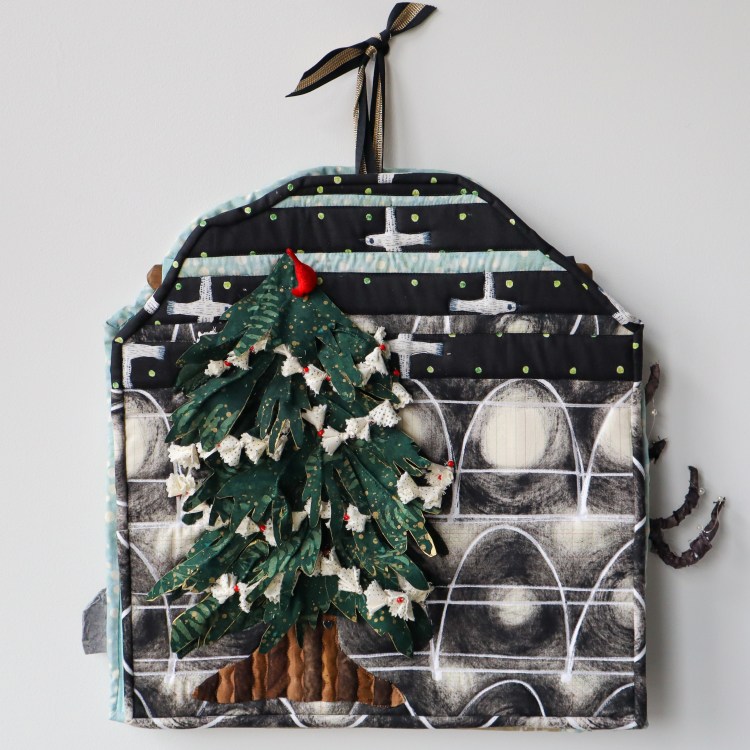
This inventive mix of discipline and precise fabric construction earned Koerber a major civic honor in 2023, when she was selected to design Harrison County’s official ornament for the Indiana State Museum’s Christmas tree in Indianapolis. Relying entirely on her signature medium, she constructed a dual-faced fabric museum piece using only fabric, quilting and intricate stitching. True to her local roots, one panel of the ornament highlighted two of Corydon’s most historic landmarks: the iconic Old Capitol building and the venerable Constitutional Elm.
Today, Rita Koerber continues to transform fabric into works of art that reflect the places she has lived, the people she has met, and the joy she finds in color and design. From a California fabric shop to the mountain community of Bukittinggi in Indonesia, to Europe, Santa Fe and finally, her studio in Harrison County, her artistic journey has been guided by curiosity, craftsmanship and imagination. Her quilts remind us that the finest works of art are often stitched together one careful piece at a time.•
Story by Judy Cato
Photos by Lorraine Hughes
.